HAPS Against Satellites: Who Wins In Stratospheric Coverage?
1. The Question in Its Own Way reveals A Change in the Way We Think About the concept of coverage
For the majority of the last several decades the discussion regarding reaching remote or under-served areas from above has been seen as a debate between satellites and ground infrastructure. The advent of high-altitude platform stations has presented an alternative that doesn't belong in either category This is precisely what draws attention to the differences. HAPS aren't looking to replace satellites in general. They're competing on specific use scenarios where the physics of operating at 20 km rather than 500 or 35,000 kilometers can yield better results. Understanding the extent to which that advantage might be real and where it isn't will be the main focus of this game.
2. Latency Is Where HAPS Win Well
The time for signal travel is determined by distance. This is the place where stratospheric systems have an undisputed advantage in structure over any orbital system. Geostationary satellites stand approximately 35,786 km above the equator, producing roundstrip latency in the range of 600 milliseconds. These are acceptable for voice calls, but with a significant delays, but not so great for real-time applications. Low Earth orbit constellations have greatly improved this situation functioning at 550 to 1,200 kilometres. They have a latency of the 20 to 40 millisecond range. A HAPS vehicle travelling at 20 miles has latency statistics equivalent the terrestrial internet. For applications where responsiveness matters like industrial control systems, emergency communications, financial transactions direct-to-cell connectivity the difference isn't insignificant.
3. Satellites win on global coverage and That's All That Matters
The stratospheric platform that is currently being developed is able to cover all of the planet. In fact, a single HAPS vehicle covers a region-wide footprint that is large by terrestrial standards, yet limited by. In order to achieve global coverage, one would need an array of platforms spread all over the globe, each with its own operating system along with energy systems and stationkeeping. Satellite constellations are particularly large LEO networks, could cover the globe with overlapping covers in ways the stratospheric system does not match current vehicle numbers. For applications that require truly global coverage like maritime tracking, global messaging, and polar coverage — satellites remain the only real option on the scale.
4. Persistence and Resolution Favour AAPS in Earth Observation
When the objective is to monitor an area in constant motion — tracking methane emissions from an industrial corridor, monitoring how a wildfire is developing in real-time as well as monitoring oil contamination that is erupting from an offshore event — the continuous near-proximity characteristic of a stratospheric base produces data quality that satellites are unable to keep up with. A satellite operating in low Earth orbit moves over any spot on the surface for minutes at a time and has revisit intervals measured in days or hours based on the size of the constellation. A HAPS vehicle holding position above the same region for weeks can provide continuous observation with sensor proximity which enables significantly higher spatial resolution. To use the stratospheric Earth observation method it is much more important than global reach.
5. Payload Flexibility Is a HAPS Advantage Satellites That Can't effortlessly match
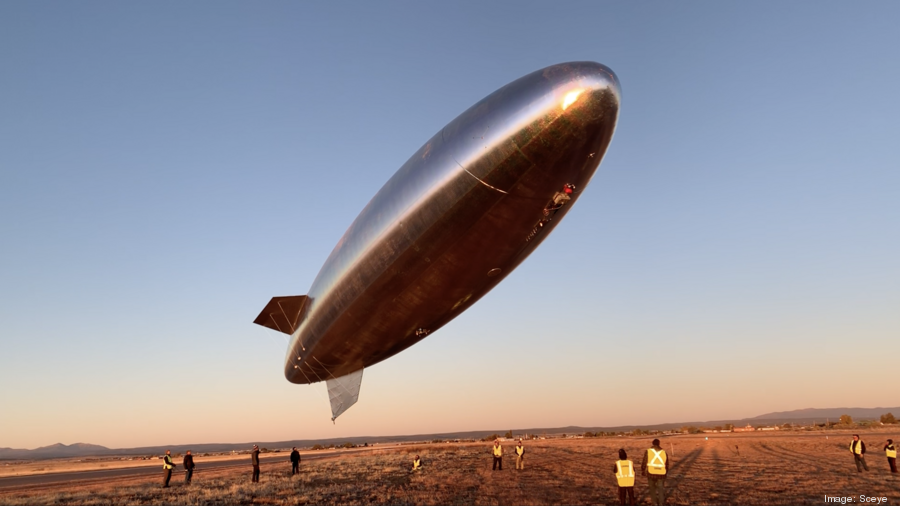
Once a satellite is in orbit, its payload becomes fixed. Making changes to sensors, swapping hardware, or adding new instruments is a matter of launching completely new spacecraft. The stratospheric platform returns back to ground between missions, which means its payload can be modified, reconfigured or replaced completely as the requirements of missions change or improved technology becomes available. Sceye's airship design is specifically designed to accommodate important payload capacity, making possible the use of telecommunications antennas, green gas sensors and disaster detection systems in the same platform This flexibility would require multiple dedicated satellites to replicate, each with its own launched cost as well as orbital slots.
6. The Cost Structure is Significantly Different
Launching a satellite requires the costs of rockets including ground segment development, insurance and acceptance of the fact that hardware malfunctions in orbit are permanent write-offs. Stratospheric platforms function more like aircraft — they can be recovered, examined, repaired, and redeployed. This doesn't mean that they are cheaper than satellites based on a basis of coverage-area, but it can alter the risk profile as well as their upgrade cost significantly. In the case of operators who are testing new products for new services or entering market, the possibility of retrieving or modify the system rather being able to accept orbital technology as a sunk cost is an essential operational advantage for the HAPS sector, especially in its early commercial stages that the HAPS industry is in.
7. HAPS could be used to provide 5G Backhaul In Place of Satellites Where Satellites Do Not effectively
The telecommunications network architecture that is facilitated by the high-altitude platform station that operates as a HIBS or like a cell tower located in the sky was designed to integrate with existing technologies for wireless networks, in ways satellite communication does not. Beamforming from a spheric telecom antenna enables dynamic signal distribution throughout a coverage region and supports 5G backhaul equipment on the ground as well as direct-to devices simultaneously. Satellites are getting more adept in this field, however the physics of operating closer to the ground gives stratospheric antennas an advantage in terms of signal strength, frequency reuse, and compatibility with spectrum allocations created for terrestrial networks.
8. Operational and weather risk differ in significant ways between the Two
Satellites, when they are in stable orbit, are generally indifferent to terrestrial weather. A HAPS vehicle operating in the upper stratosphere faces the more challenging operational environment which includes stratospheric wind patterns including temperature gradients and the engineering challenge of surviving night at altitude without losing station. The diurnal cycle or the every day rhythm of solar energy availability and the draw of power during the night is a major design constraint that all solar-powered HAPS have to work to overcome. Modern advances in lithium-sulfur battery capacity along with solar cell efficacy are closing this gap, but it's an actual operational challenge which satellite operators aren't required to have to deal with in the same way.
9. In truth, the answer is They serve different missions.
Distinguishing satellites from HAPS as a winner-takes-all competition misreads how the non-terrestrial technology is likely develop. The more accurate picture is one of a multi-layered structure in which satellites have global reach, and also applications where coverage universality tops all other aspects while stratospheric platforms perform regions with persistence functions -connectivity in difficult geographical environments, continuous monitoring of environmental conditions in disaster recovery, and 5G expansion to areas where satellite rollouts on land are not economically feasible. Sceye's positioning reflects exactly what it says: a mobile platform specifically designed to operate in the region of a specific location, that can last for a longer period, and includes a sensor as well as a communications package which satellites can't duplicate at that height and close proximity.
10. The Competition is likely to sharpen Both Technologies
There's a good argument that the growth of reliable HAPS programs has led to a surge in development in satellite technology and the reverse is also true. LEO the constellation operators have expanded coverage density and latency in ways that have raised the bar HAPS must be able to compete. HAPS developers have proven their regional monitoring capabilities that will force satellite operators to consider revoking frequency and sensors resolution. The Sceye and SoftBank collaboration targeting Japan's nationwide HAPS network, with pre-commercial services planned for 2026 is among the most clear signals that suggest that stratospheric platforms are evolving from a theoretical competitor to a full-time participant in shaping the way that the non-terrestrial connectivity and observation market develops. Both technologies will be more effective for the pressure. Read the top Sceye endurance for site info including japan nation-wide network of softbank corp, what are the haps, sceye earth observation, sceye haps softbank partnership details, Sceye Softbank, sceye haps payload capacity, what is a haps, what's the haps, softbank group satellite communication investments, high-altitude platform stations definition and characteristics and more.
Mikkel Vestergaard's Vision Behind Sceye's Aerospace Mission
1. Founding Vision is an underrated factor to Aerospace Company Outcomes
The aerospace business produces two broad categories of companies. The first one is based on technologies looking for potential applications that require engineering capabilities seeking a market. The second takes a need that is significant and works toward the technology to address the issue. This may sound like a logical distinction when you think about what each kind of business actually develops in its partnerships, what kind of partnerships it is seeking and how it decisions when resources are limited. Sceye falls into the second category, and being aware of this is vital in understanding the reasons why the company chooses the particular engineering choices it has -the lighter-than air design, the multi-mission payloads that emphasize endurance, as well as having its founding location that is located in New Mexico rather than the coastal clusters of aerospace which draw the largest number of venture-backed companies in space.
2. The Issue Vestergaard began to address was bigger than Connectivity
The majority of HAPS companies find their main story around telecommunications, connecting gaps, the untapped billions, and the economics of reaching distant populations with no the infrastructure of a terrestrial network. These are real and important problems, but they are commercial and require solutions. Mikkel Vestergaard's starting point was different. His experience in applying cutting-edge technology to address environmental and humanitarian challenges produced a founding orientation at Sceye that sees connectivity as an output of the stratospheric infrastructure instead of its primary purpose. Monitoring of greenhouse gas emissions as well as disaster detection, earth observation and monitoring of oil pollution and natural resource management were all part of the mission's infrastructure from in the beginning. But they were not additional features later added to make a telecommunications platform appear more socially aware.
3. The Multi-Mission Platform Is a direct expression of that Vision
Once you realize that the initial question was about how the it could be used to solve world's most significant connecting and monitoring problems simultaneously, the multipayload platform stops looking like a clever commercial strategy, and it starts to look like the right answer to the question. A platform that is equipped with the latest in telecommunications equipment as well as methane monitoring sensors as well as wildfire detection technology isn't attempting at being everything for everyone — it's expressing an understanding that problems worth solving from stratosphere are interconnected, and a platform capable of handling multiple of them at once is more aligned with the purpose than a device built for just one revenue stream.
4. New Mexico Was a Deliberate Choice, and not an Accidental One
The location of Sceye's located in New Mexico reflects practical engineering requirements such as airspace access, atmospheric testing conditions, capacity to altitude — but also conveys something about the business's identity. The well-established aerospace industries of California and Texas draw companies whose main target audience are investors, defence contractors, as well as the media ecosystem that covers their interests. New Mexico offers something different it has the physical infrastructure needed to conduct the actual work of designing and testing stratospheric, lighter-than-air systems without the constraints due to proximity to the audience who invest in and write about aerospace. As one of the aerospace companies in New Mexico, Sceye has created a development program that is centered on engineering validation, not public narrative. It's a decision that is a reflection of a founder more interested in whether the platform actually functions rather than whether it creates amazing announcement cycles.
5. It is a design priority to ensure that endurance It reflects a long-term Mission Orientation
Short-endurance HAPS platforms are fascinating demonstrations. Long-endurance platform are an infrastructure. The importance placed the importance of Sceye longevity — creating vehicles that could hold stations indefinitely for months, weeks or even months rather than days — has been a result of a founder's realization that the challenges to be solved from the stratosphere can't be solved by themselves in between flight missions. Monitoring of greenhouse gases that runs for a period of a week and goes out of service, creating a document with no scientific or regulatory worth. Emergency response that requires a platform to be repositioned and relaunched after each deployment will not be able to provide the constant early warning system that emergency management professionals need. The endurance specifications are a statement about what the job actually demands instead of a metric for performance which is used solely for its own benefit.
6. The Humanitarian Lens Shapes Which Partnerships Receive Prioritisation
It is not every partnership worth pursuing considering the criteria an organization employs to evaluate potential collaborators tells you something fundamental about its priorities. Sceye's collaboration with SoftBank on Japan's HAPS network — which is aimed at early commercial services in 2026is noteworthy not only due to its commercial scope, but for its alignment with the country that is in need of the benefits of stratospheric networks. Japan's seismic exposure, complicated geography, and national policy of environmental monitoring makes it a suitable deployment scenario where the platform's multimission capabilities satisfy actual needs, not just earning revenue in a space that already has sufficient alternatives. This alignment between commercial partnerships with mission and partnership is not in any way accidental.
7. It is important to make investments into Future Technologies Requires Conviction About the Problem
Sceye is a startup company operating in a developing environment that the technologies it is relying on like lithium-sulfur cells at 425 Wh/kg energy densities, high-efficiency solar cells designed for stratospheric aircrafts, and advanced beamforming for telecom antennas in stratospheric space — are near the limits of what is currently feasible. A business plan built around technologies that are improving but not yet fully mature requires a leader with the right understanding of the importance of the issue to justify the risk to the timeline. Vestergaard's fervent belief that the stratospheric internet will become an ongoing layer of global connectivity and monitoring will be the foundation for investing in future technologies that won't reach their full operational potential until their platform has already been tested commercially.
8. Its Environmental Monitoring Mission Has Become More Critical Since Its Creation
One of the advantages that comes with forming a business around the real issue instead of an emerging trend in technology is that the problem has a tendency to get more rather or less significant with time. When Sceye was created, the case for continued stratospheric greenhouse gas monitoring Wildfire detection, monitoring of climate-related disasters was convincing in principle. In the intervening years there has been an increase in the number of wildfires, increased scrutiny of methane emissions in international climate frameworks, and the evidence of inadequacy of the existing monitoring infrastructure have all strengthened that argument to a large extent. The vision for the first time hasn't needed revision to remain valid – the globe has moved towards it.
9. The Careers at Sceye show their Breadth of the Mission
The array of disciplines needed to build and operate stratospheric platforms for multi-mission purposes is far greater than most aerospace programmes require. Sceye careers include meteorology, materials engineering, communications, power systems, remotely sensing software design, and regulatory affairs – an inter-disciplinary profile that shows the vastness of what the platform was designed to do. Businesses that are based on a single-use technology usually recruit only within the particular discipline that is associated with that technology. Companies that are founded around a specific issue which requires multiple technologies to make hires across the boundaries of these disciplines. The type of candidate Sceye recruits and creates is a reflection their vision.
10. The Vision Functions Because It's Specific About the Issue and not the solution
The most long-lasting visions of founding in technology companies are specific about the problem that they're attempting to solve and flexible about the ways to solve it. Vestergaard's framing — pervasive stratospheric network for monitoring, connectivity, environmental observation is sufficiently specific to produce clear engineering requirements and clear partnership criteria, but is flexible enough to adapt to the changing requirements of technological advancements that enable. As battery chemistry improves, as solar cell efficiency advances, as HIBS standards develop, and as the regulatory environment for stratospheric operation evolves, Sceye's mission stays the same while the method used to execute that mission is able to incorporate the most effective technology available at any stage. This kind of structure — fixed on the problem, adaptive on the solution — is what gives the aerospace mission coherence throughout a timeline of development determined in years rather than the cycles of a product. View the recommended japan nation-wide network of softbank corp for website examples including Cell tower in the sky, investment in future tecnologies, Sceye endurance, Lighter-than-air systems, Solar-powered HAPS, softbank group satellite communication investments, Sceye stratospheric platforms, sceye haps airship status 2025 2026 softbank, whats the haps, sceye aerospace and more.